
Client Case Study
Helping AMP build a practical foundation for sustainability reporting
Connecting financial materiality, Scope 3 emissions and reporting through a proportionate first-year approach.

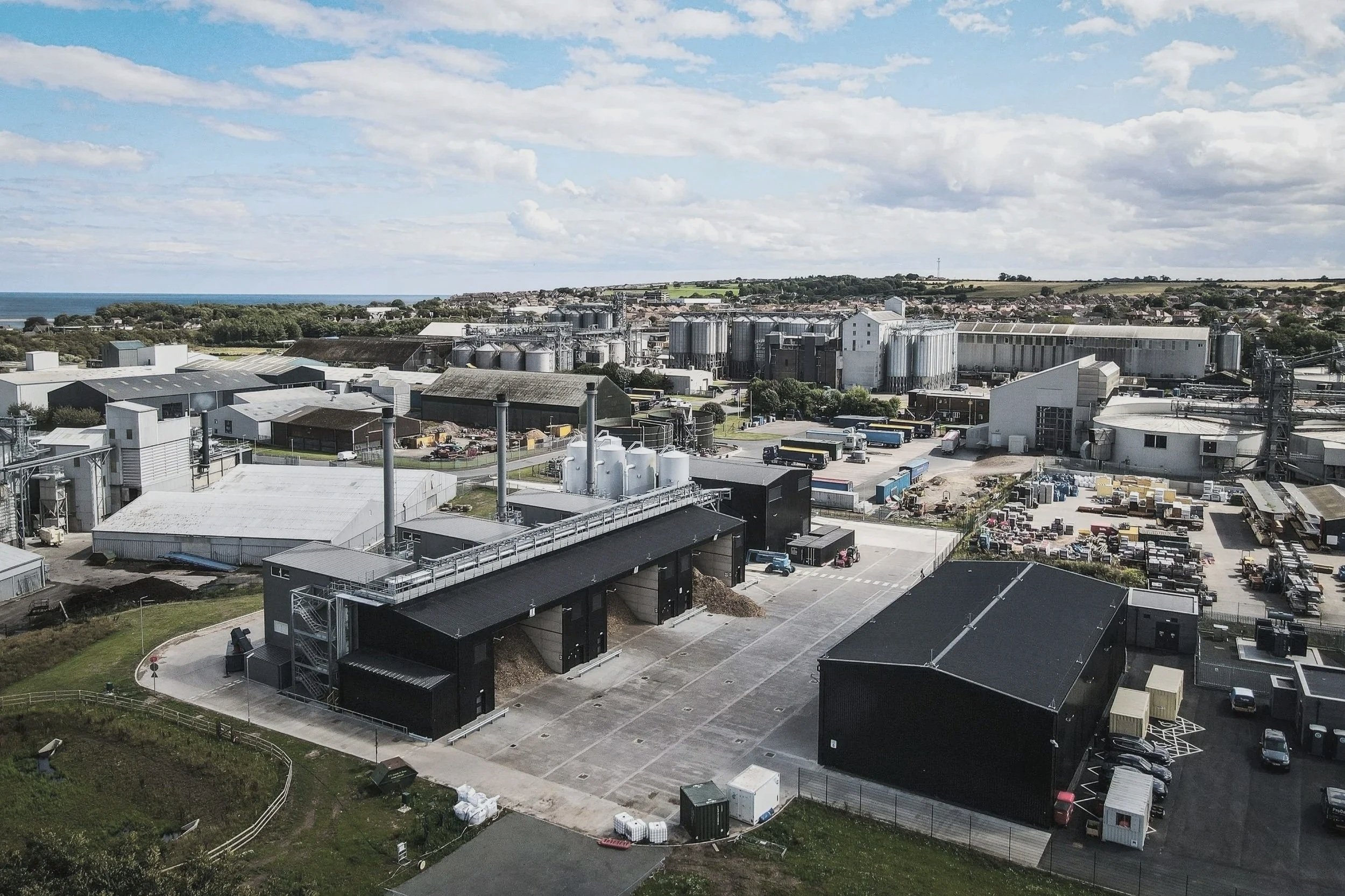
AMP partnered with Simpsons Malt to pair biomass with curtailed-wind-powered electric heat, cutting CO₂ emissions by 25,000 tonnes annually.
AMP is a UK business operating across industrial decarbonisation, grid flexibility and energy services.
The energy transition sits at the heart of AMP’s business: supporting grid decarbonisation through the installation of flexibility assets, and helping other businesses decarbonise by switching to lower carbon intensity fuels.
AMP chose to develop its first sustainability report to bring together its existing approach, priorities and performance, and give investors and other stakeholders a clear view of what matters most to its business.
Grant Fides provided additional senior capacity and specialist support across three connected areas: financial materiality, Scope 3 emissions and sustainability reporting.
Support provided
Financial materiality assessment, Scope 3 methodology support and first-year sustainability report development.
Delivery approach
Finance-led, proportionate and aligned to AMP’s reporting maturity, data availability and internal capacity.
AMP’s objective
To formalise its sustainability priorities and communicate its approach through a credible first sustainability report.
Outcome
Clearer sustainability priorities, a stronger reporting foundation and practical next steps for future maturity.
“We wanted a first sustainability report that was genuinely useful rather than an exercise in box-ticking. Grant Fides brought the technical depth we needed and the judgement to keep it proportionate. We came out of it with a great first year report and a clear action plan for further improvements”.
Laurence Goodman, CFO, AMP
Why a proportionate approach mattered
The energy transition already sits at the heart of AMP’s activities and strategy. Developing its first sustainability report provided an opportunity to bring that story together, supported by a more structured assessment of the risks, opportunities and emissions associated with the business.
AMP wanted the report to be useful and credible from the outset. It needed an approach that reflected its business, its stakeholders and the information available internally.
The project required technical input alongside additional senior capacity to help management achieve their objectives at pace.
A practical first-year approach
Grant Fides recommended beginning with financial materiality rather than moving directly into report drafting. This established which sustainability-related issues mattered most to AMP before decisions were made about emissions measurement and report content.
The Scope 3 assessment then focused effort on the categories most relevant to the business. The reporting work brought everything together across strategy, governance, risk management, metrics and targets.
The aim was not to address everything in the first year. It was to establish a sound starting point that AMP could use for investor discussions, internal decision-making and future reporting.
How Grant Fides supported AMP
01
Establishing the priorities
Grant Fides designed and supported AMP’s first financial materiality assessment.
The work included mapping AMP’s activities and value chain, developing and screening a long-list of sustainability risks and opportunities, and gathering evidence through stakeholder engagement.
Grant Fides developed a scoring methodology covering likelihood, financial magnitude and time horizon that complemented AMP’s existing enterprise risk management framework. This provided a structured basis for management judgement before the final assessment was validated with senior management.
The process identified four material opportunities and nine material risks, giving AMP a clearer basis for prioritisation and an important input into its first sustainability report.
02
Building a workable Scope 3 process
Rather than attempting to calculate all 15 Scope 3 categories immediately, Grant Fides assessed their relevance across AMP’s activities and value chain. Working with management, five categories were prioritised for year-one reporting.
Grant Fides developed practical calculation methods based on the information AMP could access, including spend, volume and other activity data.
A supporting basis of reporting documented the boundaries, methodologies, assumptions and limitations. This created a structured process that AMP could repeat and improve as its data and reporting capability developed.
03
Bringing the evidence into the report
Grant Fides developed a report structure connecting AMP’s strategy and three core business activities with governance, material risks and opportunities, risk management, metrics and targets.
The approach was informed by IFRS S1 and IFRS S2, while remaining proportionate to AMP’s circumstances and reporting maturity.
Grant Fides also reviewed draft content and recommended practical improvements. This included distinguishing current performance from future plans and AMP’s direct performance from the wider system benefits enabled by its activities.
Outcome
The project gave AMP a clearer view of the sustainability-related risks and opportunities most relevant to its performance and future prospects.
It also created a practical basis for prioritising five Scope 3 categories, with documented calculation methods and a report structure connected to strategy, governance and risk management.
The work established a proportionate foundation that AMP can develop over future reporting cycles as its data, systems and internal capability mature.
Facing a similar challenge?
If you are developing your first sustainability report, strengthening an existing approach or looking for additional capacity, an introductory conversation can help clarify the most useful next step.